the main differences are resource delivery and management responsibilities. choosing a local merchant usually means purchasing or leasing a physical machine to gain more independent hardware management rights and customization capabilities, but it requires bearing the cost of computer room, cooling, electricity and daily maintenance. choosing a cloud provider calls computing resources on demand in the form of services, eliminating physical operation and maintenance, and gaining the advantages of elastic expansion and rapid deployment. however, under long-term large-scale constant load, it may incur higher operating costs and is limited by the supplier's products and network dependence.
the one-time acquisition cost and long-term operating cost should be combined in the evaluation. one-time expenses include hardware procurement, installation and delivery; long-term expenses cover electricity bills, network fees, computer room rental, spare parts, replacement cycles, manual operation and maintenance and security reinforcement. when comparing cloud providers, you should include pay-as-you-go billing, data transfer fees, backup and snapshot fees, and reserved instances or annual discounts. the calculation period is recommended to be based on 3 to 5 years, comparing average annual expenditures and taking into account performance depreciation and availability compensation.
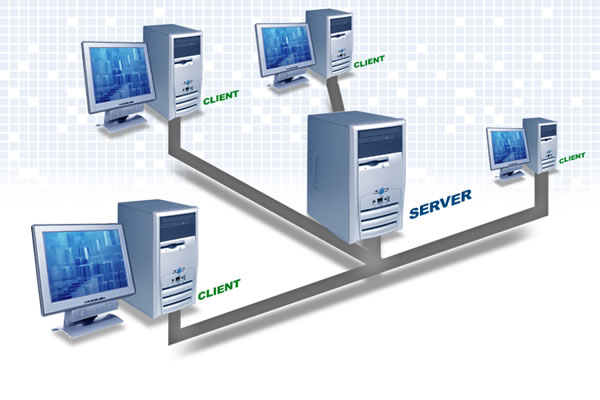
if your business has strict requirements for low latency or data sovereignty, it will be more advantageous to choose a locally deployed malaysian computer server or use a local cloud region. local merchants can usually provide faster on-site response and customized compliance solutions, while multinational cloud providers, although more mature in the global ecosystem, may require additional configuration or contract terms in terms of data non-exit, auditing, and local legal compliance. network topology and isp interconnection will also directly affect user experience, and it is necessary to evaluate the end-to-end delay and bandwidth guarantee from the user to the server.
the elasticity of cloud providers has great advantages in short-term expansion, disaster recovery drills and rapid launch, and is suitable for fluctuating loads and short-term projects. but if the business requires deeply customized hardware (such as gpu clusters, dedicated storage arrays), strict resource isolation, or clear control over the hardware life cycle, local servers are still irreplaceable. a hybrid architecture can be adopted: core sensitive services or stable loads are placed locally, and burst loads and backup/disaster recovery are placed in the cloud, thus taking into account both controllability and flexibility.
when purchasing, clarify the service level agreement (sla), warranty period, on-site repair response time and spare parts strategy; ask the supplier whether it provides installation, migration, monitoring and operation and maintenance training. for cloud providers , focus on api compatibility, billing transparency, network outbound charges and availability zone redundancy. the expansion strategy should reserve interface and capacity budgets to ensure that future expansion will not trigger large-scale migration. finally, evaluate the supplier's security incident response, compliance certificates (such as iso, pdpa related), customer reviews and local support capabilities.
- Latest articles
- Detailed Explanation Of Security Isolation And DDoS Protection Strategies For VPS Deployment Recommendations At Vietnam Nodes
- Students And Developers Are Concerned About How Much It Costs To Rent VPS In Korea, Low-cost Environments, And Limited-time Trial Recommendations
- Common Misconception Reminder: Issues And Fixes Often Overlooked When US VPS Access Is Slow
- In-depth Analysis Of The Performance Differences Between Free Servers In Korea And Paid Plans
- Enterprises Expanding Markets To Sell Servers To Vietnam With Localized Pricing And After-sales System Setup
- How To Test CN2 Japan Link Quality And Generate Visual Reports
- Illustrated Guide To Setting Up IPs For Singapore Servers, Completing Network Segment Routing And Firewall Configuration
- Key Points For Disaster Recovery Switching And Load Balancing Design For VPS Nodes At The Vietnamese Node In Enterprise-level Architectures
- How To Determine How Much To Rent A VPS In Korea Based On Business Scale And Match Performance Requirements
- Vietnamese CN2 Service Provider: Price And Service Comparison To Help You Choose Quickly
- Popular tags
-

Prospects And Development Trends Of Cn2 Network Services In Malaysia
this article will conduct in-depth discussion on the prospects and development trends of cn2 network services in malaysia, and analyze its performance in the server field and potential market opportunities. -

The Latest Application Cases And Analysis Of Nvidia Servers In Malaysia
discuss the latest application cases and analysis of nvidia servers in malaysia, revealing its impact and prospects in various industries. -

How To Choose The Malaysia Cn2 Vps Service That Suits You
this article will introduce you to how to choose the malaysia cn2 vps service that suits you and help you find the best quality server.